
1. Five Core Selection Criteria
(1). Solar Panel (Power Generation Unit)
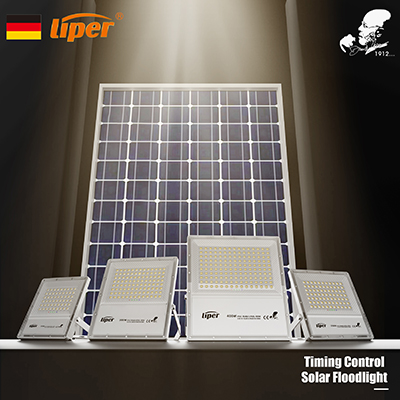
- Monocrystalline silicon is preferred: conversion efficiency of 18‑22%, excellent low‑light power generation and high stability.
- Power matching: The solar panel power shall be 2‑3 times the LED actual power, to ensure sufficient charging and continuous lighting on rainy days.
- Premium construction: Tempered glass plus aluminum‑alloy frame, anti‑aging, resistant to outdoor sun exposure and rain‑wind erosion.
(2). Energy‑storage Battery (Core for Runtime Performance)
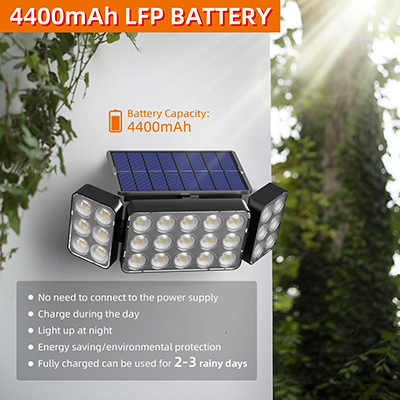
- Lithium‑iron‑phosphate (LiFePO4) battery is mandatory: over 2000 charge‑discharge cycles, service life of 5‑8 years, good high‑low temperature resistance and high safety. Avoid lead‑acid or refurbished batteries.
- Evaluate capacity by Wh (watt‑hour) instead of misleading Ah figures.
- Battery‑life requirement: 2-3 consecutive rainy‑day runtime for general scenarios
- Must be equipped with BMS protection board: prevents over‑charging, over‑discharging, short‑circuit and abnormal temperature to avoid battery swelling or fire hazards.
(3). LED Light Source (Brightness & Service Life)
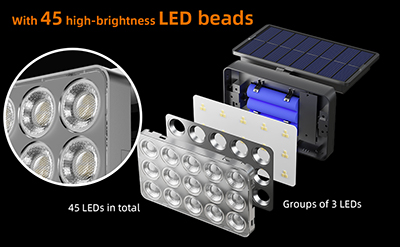
- Judge brightness by lumen (lm). Luminous efficacy ≥80 lm/W. Do not rely solely on nominal wattage.
- Color‑temperature options: 4000K/6500k for roads & engineering projects; 3000K warm white for courtyards & landscapes
- Color rendering index: Ra ≥70 for general use; Ra ≥80 for municipal projects.
- Adopt aluminum substrate and aluminum housing for heat dissipation, to greatly reduce light decay and extend service life.
(4). Intelligent Controller (Brain of the Lamp)
- MPPT controller is preferred for higher charging efficiency over conventional PWM controllers.
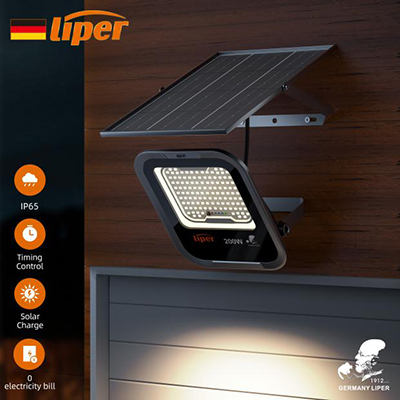
- Standard functions: automatic on‑off by light sensor, microwave / human‑body induction, half‑power dimming and voltage stabilization protection.
(5). Protection & Mechanical Structure (Outdoor Durability)
- Minimum IP65 ingress protection for general outdoor use; upgrade to IP67 for coastal and high‑rainfall areas.
- Lamp pole: hot‑dip galvanized or aluminum‑alloy material for anti‑corrosion, rust‑proof and wind‑resistant performance.
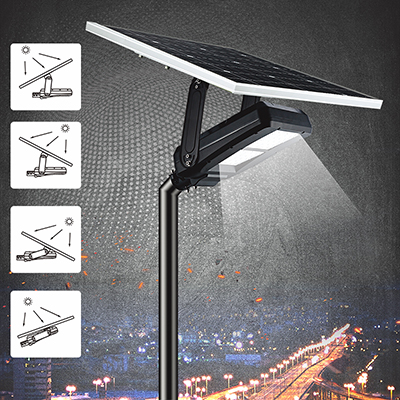
2.Power Configuration Based on Local Sunlight Conditions
Effective sunshine hours vary greatly across regions and directly determine required product specifications:
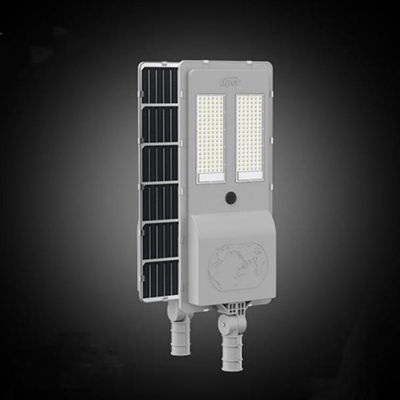
- Equatorial Africa: 4.5‑6 h (abundant sunlight)
- Saudi Arabia, Middle East: 4‑5.5 h
- Southern China: 3‑4 h
- Rain‑prone regions: 2.5‑3 h (enlarge solar panel and battery capacity accordingly)
Recommended installation heights:
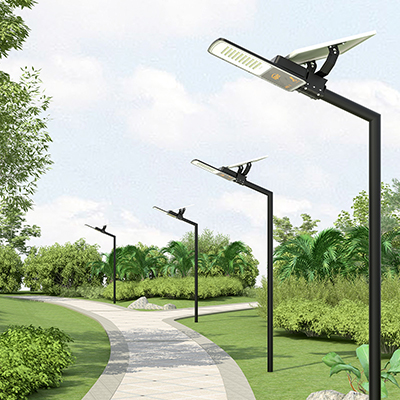
- Courtyard lighting: 2.5‑3 m
- Footpaths & minor roads: 3‑4 m
- Major municipal roads: 6 m and above
3.Identify Inflated Specifications: Real‑World Power Calculation
Nominal power ≠ actual working power
- Battery capacity formula: Wh = Ah × rated voltage
Example: 12.8V 20Ah battery = 12.8 × 20 = 256 Wh
- Actual LED power formula: Power = Working Voltage × Working Current
For product selection, quotation and factory inspection, refer to actual working parameters.
4. Critical Procurement Rule: Built‑in BMS Is Mandatory
BMS stands for Battery Management System. It provides six key protections:
1. ✅ Over‑charge protection: cuts off solar charging when battery is fully charged (prevents swelling).
2. ✅ Over‑discharge protection: cuts off output when voltage drops to threshold (most critical. Deep discharge will permanently damage lithium batteries).
3. ✅ Over‑current protection: power cut‑off under short‑circuit or excessive load.
4. ✅ Short‑circuit protection: instant protection when positive and negative poles are accidentally connected.
5. ✅ Cell balancing (premium‑grade BMS): align voltage of series cells to extend overall battery service life.
6. ✅ Temperature protection: limits charge / discharge under excessive high or low temperature.
- ✅ Battery pack with built‑in BMS: full protection, safe for export and compliant with certification requirements.
- ❌ Bare cell without BMS: no protection. High risk of burnout, swelling and fire. Procurement and assembly are prohibited.
High‑quality solar lamps feature: monocrystalline solar panel, LiFePO4 battery with built‑in BMS protection, high‑luminosity LED source, MPPT controller and high‑grade ingress protection. Match panel‑battery capacity according to local sunshine conditions. This delivers stable year‑round lighting, low aft
Post time: Sep-28-2026


